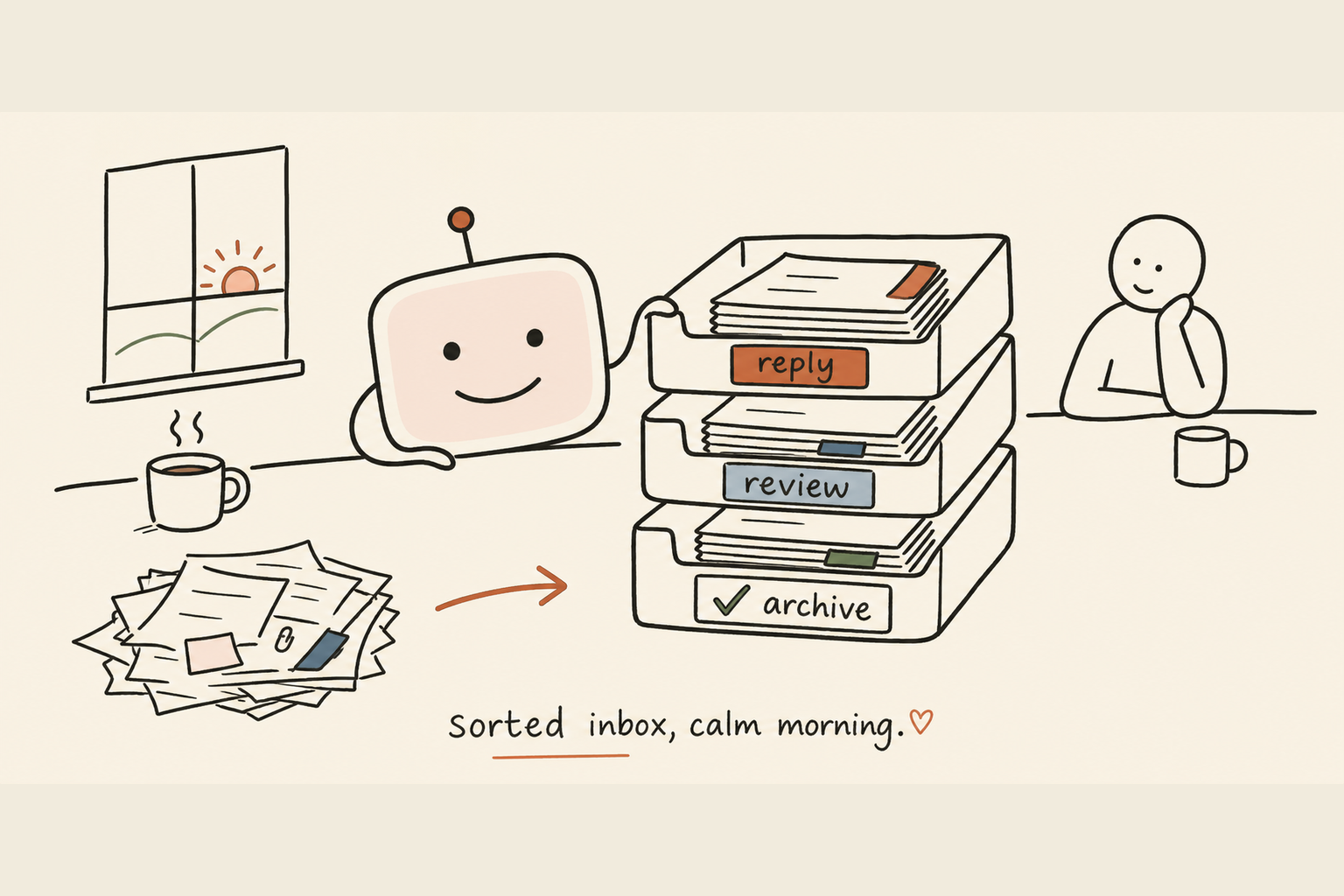
Inbox, calendar, meetings, and documents
In this chapter you will learn to
- Hand your inbox, calendar, meetings and documents to one agent.
- Triage the morning pile into reply, FYI and ignore.
- Capture work from your phone, a voice note becomes a follow-up.
The four things that eat your week, handed off. Pick one and try it today.
01The problem
Four things eat your week, and none of them are your real job.
Inbox pile-up. Scheduling ping-pong. Meetings you walk into cold. Documents that stall on a blank page. None of it is hard. All of it is frequent. By Friday the real work has been squeezed into the gaps.
02The shift
Hand the admin to a connected agent, and keep one habit.
A connected agent sees your email, calendar and files and acts inside them, from a plain ask. One habit keeps it safe:
Draft, confirm, execute. It prepares, you check, then it sends. The agent proposes, you dispose.
03Watch me do it
My morning, one area at a time. Use the approved AI tool you already have. Any serious tool with the right access follows the same pattern.
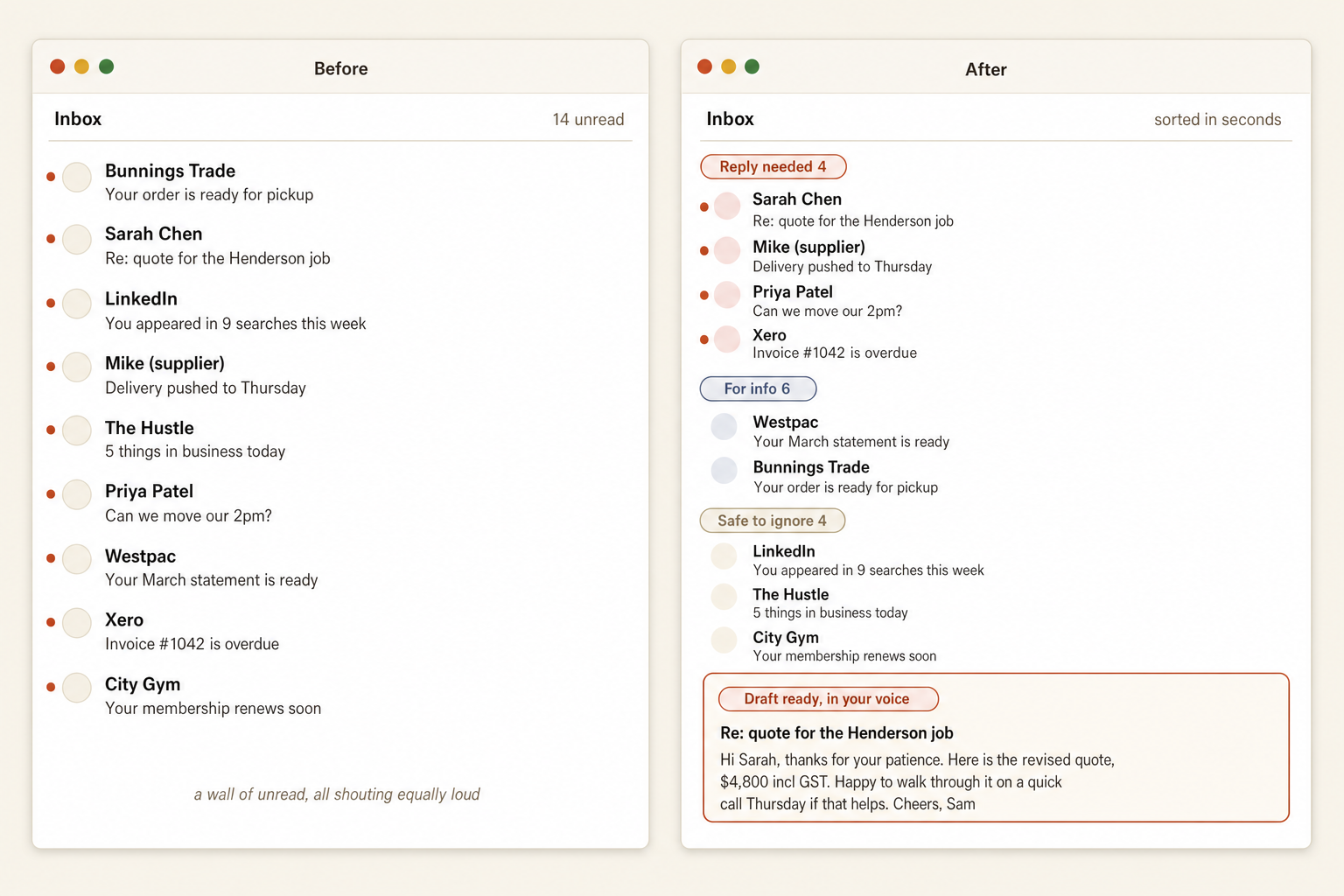
- Inbox. Triaged into reply-needed, FYI and ignore, with the replies drafted. I read, fix the tone, send. An hour becomes ten minutes.
- Calendar. "Three 30-minute slots next week, mornings, not Monday." It proposes, I pick.
- Meetings. A prep pack before, a summary with actions after.
- Documents. Never from blank. Rough notes in, first draft out, I edit.
- Phone-first work. Voice note after a site visit into a quote follow-up. Photo of a stock shelf into a reorder checklist. SMS thread into an action list. If reception is patchy, capture the note first and run the prompt once you're back online.
When a long chat starts to drift, start a fresh one. A clean desk fixes it instantly.
04Your turn
Every job is the same five moves. Learn them once.
Connect the tool once. After that it's just a different ask:
- Inbox: "Triage my unread mail into reply-needed, FYI and ignore, then draft the first group in my voice."
- Calendar: "Find three 45-minute afternoon slots next week and draft the email."
- Meetings: "Prep pack for my 2pm" before, "my notes into actions with owners and dates" after.
- Documents: "Turn these rough notes into a one-page update for my manager."
Start with email. Paste this in:
You are my executive assistant. Triage my unread email.

Sort it into: "Reply needed from me", "For info only", "Safe to ignore".
For each "Reply needed", draft a short reply in a warm, professional
tone. Australian English, no em dashes. Flag anything you are unsure of.

Do NOT send. Only draft. I will review and send myself.
The starter skills do this for you: Inbox triage, Follow-up email, Meeting prep, Document polish, Weekly report.
05Keep it safe
- Never auto-send. You click send. A wrong recipient or a bad tone can't be unsent.
- Trust nothing it states. Check every fact, name and date before you rely on it.
- Least access. Connect only tools you trust, at the narrowest permission, and revoke what you don't use.
06The payoff
Your mornings change shape. The inbox is triaged, meetings come prepped and leave with actions, documents start from a real first draft. You hand off the boring 70% and keep the 30% that needs you: your judgement, your relationships, your calls.
Your one move today: connect one tool, run the inbox prompt, and send the good drafts yourself.